Michael
Film Review

Editorial Note:
Subdeacon Moses aka Charles Barjon II was the most recent guest on my almost defunct broadcast the Philosophy of Art and Science (POAAS 152). They say the average broadcast lasts only seven episodes, so, I would say we have had a good run.
One of the fundamental questions in the philosophy of art is whether or not you can separate art from the artist. Today, nobody makes people think critically about this more than Kanye West. In the late aughts, Michael Jackson was the example par excellence. Around that time, Dave Chappelle had a comedy sketch in which a character he plays, in response to being asked in court by a lawyer whether or not he thinks Michael Jackson is guilty says, “No, man. He made thriller.” This is a caricature of the argument which still contains a kernel of truth. The publishing of this film review is not meant to adjudicate the accusations made against him, nor the millions of dollars in settlements thereof. Instead, it is a reflection on his greatness.
Written by: Charles Barjon II
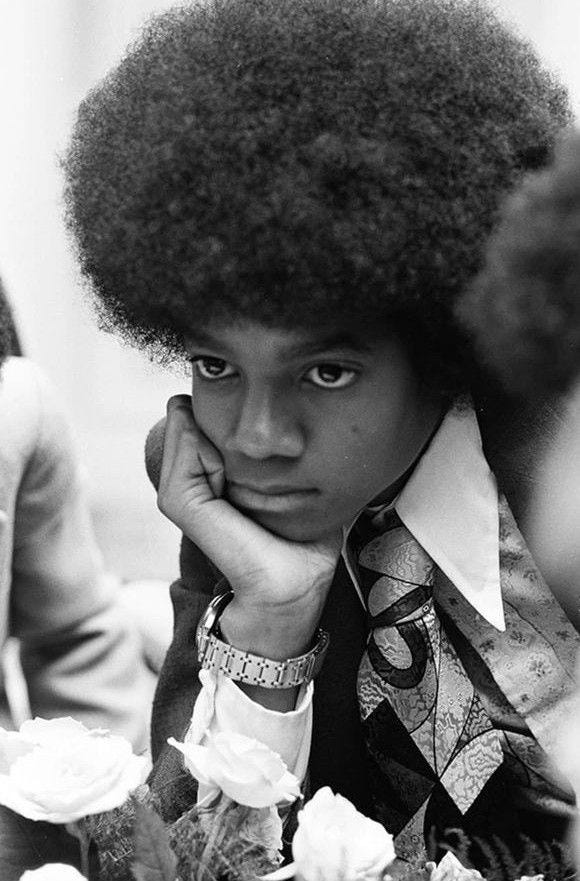
“A star can never die. It just turns into a smile and melts back into the cosmic music, the dance of life.”
― Michael Jackson, Dancing the Dream: Poems and Reflections
In 1958, the world received the most dynamic performer, entertainer, and activist ever to grace the planet. Michael Joseph Jackson was a human being who could only be described as a force of nature. With melodies that soothe the soul and dances that boggle the mind, Michael embodied hard work, dedication, and perseverance. The 2026 film Michael highlighted the life of a man that we all know. The story of a poor black kid from Gary, Indiana, who, through his discipline, raised the status not only of his family but also of an entire generation of black artists and musicians. One could say that there has never been a more famous human being! The 130-minute film focuses on the genesis of the megastar that would soon be crowned the “King of Pop”.
Starting with his humble roots in Gary, Indiana, alongside his brothers, the famous “Jackson 5” who would later rebrand as “The Jacksons,” we see a young Michael Jackson learn the ins-and-outs of stage presence, professionalism, and most of all, the commitment it takes to be great. Juliano Valdi, who played the child Michael, did a superb job in portraying the softness that we all know and love Michael for. Valdi perfected Michael’s mannerisms and early dance moves, truly teleporting us all back to the soulful days of the 1970s. Perhaps the highlight of Validi’s performance was his ability to remind the world that Michael Jackson had to work tirelessly, as a child, to make it to the big leagues. Valdi was remarkable in his ability to show not only the budding giant but also the innocent child seeking affection and tenderness.
Bearing this in mind, the film’s editors removed hours of footage to respect legal agreements made during Michael’s lifetime and to keep the film in the 2-hour ballpark. By doing so, we miss key moments that contextualize Michael’s desire for greater ownership of his craft. The audience does not fully grasp the impact of Jackson 5 mania, nor do we see an accurate depiction of the road that led to their Motown Recording contract. We do not see their time on Steel Town Records, nor do we see his brother, Tito Jackson, famously breaking his father Joseph’s guitar string, which set in motion the ripple effect of their careers. With that being said, it is important to remember the film is Michael, not “The Jacksons”, and we must remember this if we are to appreciate what was delivered to audiences.
The best transition in the film is when we first see Jafaar Jackson, who portrays the adult version of his uncle Michael, set in the late 1970s. The camera pans from an energetic, nostalgic Jackson 5 performance to Jafaar standing at a high-rise window, looking out. Truly, we see with our eyes, Michael Jackson, but think with our brains, “No, that is Jaafar”! Then we hear him softly say, with a smile, “pure escapism, Quincy,” in a tone that almost waters the eyes. For his first acting role, Jaafar incredibly brings his late uncle back to life. Vocally sounding identical, capturing Michael’s midwestern accent, and physically capturing the whimsical childlike essence that seemed never to leave. It is important to remember, though, that in real life, Michael Jackson was a very successful, mature, intelligent businessman.
The movie, at times, overdoes Michael’s childlikeness, seemingly to avoid the very serious, mature adult who was responsible for record deals and his early adult solo success. Perhaps the movie aimed to humanize him in light of how brutal the public has been, and by focusing on his childlikeness, the movie invites the viewer to develop the empathy necessary to understand the plight that may be portrayed in a sequel. In the same vein, we must further criticize the storytelling. In addition to overdoing childlikeness, we also see missed opportunities to correct the narrative surrounding his appearance. The movie recklessly shows Michael admiring Peter Pan’s facial features and then touching his own nose with a look of disappointment, and eventually, cutting to a scene with Michael preparing to undergo plastic surgery. When in reality, the first time Michael went under the knife was due to breaking his nose while performing. Are we denying that he had self-esteem issues due to childhood bullying? No. But we are saying that context matters, and this was the worst part of the movie. Michael Jackson is regularly mocked for his surgeries, and this would have been a great opportunity to correct the narrative. By not mentioning his nose breaking or even that he had discoid lupus, which affects healing, some audiences may continue to buy into the false narrative of “he did not want to be black.” Additionally, more scenes directly showing his early struggle with vitiligo would have contributed greatly.
As we get into his adulthood, it becomes increasingly evident that the filmmakers are hyper-focused on showcasing Michael’s struggle to stand up to his father, Joseph. Joseph Jackson, a controversial figure, pushed his sons and corporally disciplined them greatly. As Michael grew, so did his desires and goals. Joseph, in addition to being a mentally triggering figure for Michael, also became a roadblock to Michael’s dreams. At times, you think, “Maybe they should have named the film Joe. In the film, we see a pattern arise, Michael achieves something great, and soon after Joseph interrupts the euphoria with a plan contrary to Michael’s ambitions. Similar to the first part of the movie, the adult years lack much-needed context. Hollywood acts, such as Diana Ross, Janet Jackson, Randy Jackson, and Brooke Shields, allegedly denied permission for their likenesses to be portrayed in the film. In doing so, many key events are missing from the film. For example, Michael’s role as the scarecrow in the classic film The Wiz, where he starred alongside Diana Ross, who played Dorothy, would have been a great addition to the film’s storytelling. The set of The Wiz was where Michael developed a bond with Quincy Jones, who would go on to produce three of Michael’s adult solo albums.
The film climaxes at the halfway point of Michael’s life on earth. Ironically, the infamous Pepsi-Cola commercial that tragically caused second and third-degree burns to Michael’s scalp was exactly the halfway point of his life. I declare this the highlight because this is when we see Michael undergo an epiphany. He realized, after surviving such a tragedy, that “Jehovah” had given him a platform to help others. Ultimately, leading him to agree to tour one last time with his brothers and go on to be one of the greatest philanthropic figures in world history. Speaking of “Jehovah”, although there were a few scenes of Michael speaking of God. Had the editors chosen to keep the scenes portraying Michael as a devout Jehovah’s Witness alongside his mother, Katherine, perhaps it would have grounded his character and shown the source of his innocence. Not to mention, Katherine Jackson’s character rarely got screen time. But I digress; it is in these hospital scenes that Jafaar looks most like his Uncle. No trace of the actor can be seen, and you begin to marvel at the art you are beholding.
The movie, now nearing its end, concludes with breathtaking performances by the Jackson brothers at Dodger Stadium, and Michael, to the surprise of everyone except his close friend and security guard, Bill Bray, announcing that this is the Jacksons’ final tour. Quickly transitioning to a performance of the song “Bad” by Michael Jackson years later, for his Bad World Tour, we finally see a Michael independent of family doing what Michael does best: being a force of nature.
All in all, Michael is a heart-touching biopic that details the genesis of the greatest ever to do it! Although the film suffers from a lack of context, the storytelling allows the audience to connect with the everyday, mundane side of an icon who has been a mystery for over half a century. From hard-to-watch moments from his childhood to the blissful achievements of his early adulthood, Michael transports the audience through time and reminds the world of the man who personified the so-called “American Dream”. With many already looking forward to a sequel, it is safe to say the film was a success, and the star power of Michael Jackson, that little black kid from Gary, never faded.
“I’m going to search for my star until I find it. It’s hidden in the drawer of innocence, wrapped in a scarf of wonder.”
― Michael Jackson, Dancing the Dream: Poems and Reflections